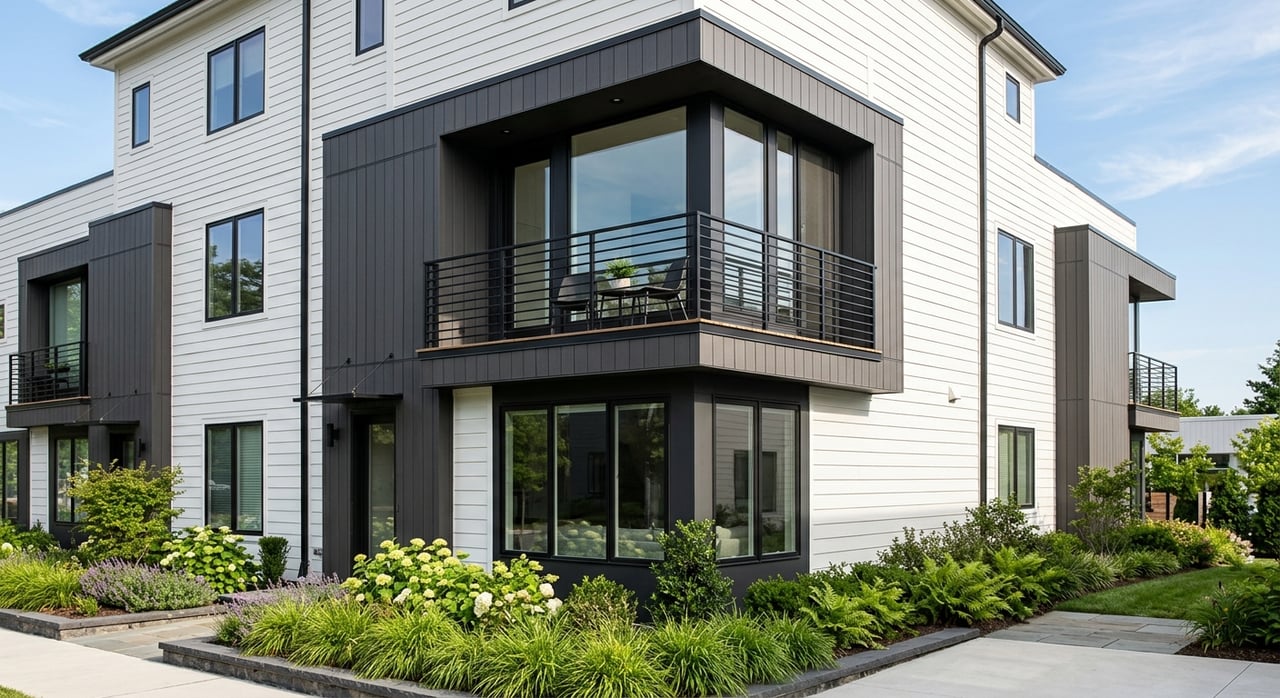
If you are thinking about buying and holding rental property in Marietta, the big question is simple: does the market support steady long-term demand without forcing you into overly thin margins? That is exactly what many investors are trying to answer right now as rents, home values, and operating costs keep shifting across metro Atlanta. In this guide, you will get a practical look at Marietta’s renter base, rent levels, submarket signals, and lease considerations so you can underwrite with more confidence. Let’s dive in.
Why Marietta Appeals to Long-Term Investors
Marietta offers something many long-term investors want: a large renter base inside a mature suburban market. The city’s 2024 population estimate was 63,122, and with an owner-occupied housing rate of 47.2%, about 52.8% of housing is renter-occupied by inference. That gives you a meaningful pool of households already participating in the rental market.
The city also shows signs of income depth and tenant stability. Median household income was $72,725, median gross rent was $1,586, and 81.0% of residents lived in the same house one year earlier. For you as an investor, that points to a market that can support both ongoing leasing activity and longer stays.
Marietta also benefits from the broader Cobb County demand base. Cobb County’s 2025 population estimate reached 793,345, with a median household income of $102,738 and median gross rent of $1,730. That larger county backdrop matters because your future tenant pool is not limited to current Marietta residents alone.
Marietta Renter Demand by the Numbers
A strong rental market is about more than population size. You also want to know who the renters are and what kind of housing they are likely to need.
Marietta’s tenant base is diverse and educated. According to the Census, 18.1% of residents are foreign-born, 24.9% speak a language other than English at home, and 47.4% of adults have a bachelor’s degree or higher. Those figures suggest a broad mix of renter households, including professionals, families, and people relocating within the metro.
Commute patterns matter too. Marietta’s mean commute time is 27.5 minutes, and the city is strongly car-oriented rather than walkable. RentCafe rates Marietta 20 out of 100 for Walk Score, 19 for Transit, and 16 for Bike, which means parking, driveway capacity, and easy road access often matter more than being close to walkable retail.
For long-term owners, that practical point should shape your buy box. A property with functional parking and convenient vehicle access may have broader tenant appeal than one that simply looks good on paper.
What Rent Levels Look Like in Marietta
If you are underwriting long-term rentals, you need realistic rent expectations by unit type. In Marietta, the apartment-only market averaged $1,606 per month as of May 3, 2026.
RentCafe’s 2026 market data shows the following typical apartment rents by bedroom count:
- Studio: $1,108
- 1-bedroom: $1,318
- 2-bedroom: $1,614
- 3-bedroom: $1,960
For 4-bedroom apartments, the current price range runs from $1,520 to $3,499, with an average size of 2,054 square feet. That wide range is important because larger units can produce higher rent, but they usually need sharper pricing and stronger presentation to lease efficiently.
Which Property Types Dominate the Market
Marietta’s rental stock sits mostly in the middle of the market, not at the luxury end. RentCafe reports that 1-bedroom floor plans make up 36% of rentals, while 2-bedroom floor plans account for 49%. Studios are only 0.6% of the market.
That mix tells you where the broadest demand likely sits. If you are choosing between several property types, 2-bedroom product has the widest base of comparable inventory and likely the broadest renter pool. Three-bedroom rentals can also make sense because they serve households that need more space without jumping into the thinner 4-bedroom segment.
The building stock matters too. About 74% of apartments are in complexes with fewer than 50 units, 14% are in buildings with 50 units or more, and 12% are single-family rentals. The average rental building is 39 years old, and only 21% were built since 2000.
For investors, that points toward a market defined by older garden-style and smaller-scale inventory. In practical terms, you should plan for conservative repair reserves, realistic turnover costs, and maintenance needs that come with aging properties.
Where Inventory Signals Are Strongest
Marietta does not publish one official citywide vacancy figure, so you have to look at local inventory patterns and metro fundamentals for clues. At the Atlanta metro level, apartment conditions improved through 2025 and into 2026.
Northmarq reported that Atlanta vacancy fell 220 basis points year over year in Q2 2025 and dropped below 6% for the first time in nearly three years, with a forecast of 5.9% by the end of 2025. Marcus & Millichap’s 1Q 2026 Atlanta multifamily report also said renter demand outpaced supply in 2024 and 2025, with further vacancy improvement expected in 2026.
That does not guarantee every pocket of Marietta is equally tight. Still, it does support the idea that the broader suburban leasing backdrop is healthier than it was during the heavy supply wave of 2023 and 2024.
Locally, the clearest signal is product mix. One-bedroom and two-bedroom units dominate available stock, while studios are rare and 4-bedroom inventory is scarce. For you, that means 2-bedroom and 3-bedroom properties often offer the best balance of demand depth and leasing flexibility.
Comparing Marietta ZIP Codes for Investors
A useful way to compare Marietta submarkets is by looking at rough gross rent-to-value ratios. This is not the same thing as a cap rate, but it can help you screen areas before you build a full pro forma.
Here is how current rent and home-value data compare across key Marietta ZIP codes:
| ZIP Code | Avg. Rent | Home Value | Rough Gross Rent-to-Value | Notable Signal |
|---|---|---|---|---|
| 30060 | $1,557 | $343,644 | 5.4% | Lower basis, lower rent |
| 30064 | $1,822 | $493,920 | 4.4% | Strongest recent rent growth |
| 30067 | $1,549 | $406,976 | 4.6% | Middle-ground pricing |
| 30062 | $1,945 | $551,661 | 4.2% | Highest price, tighter yield math |
Each submarket can fit a different strategy.
30060: Lower Basis Entry Point
In 30060, average rent is $1,557 and home value is $343,644, producing a rough gross rent-to-value ratio of about 5.4%. Zillow also reported 132 for-sale listings and a median of 54 days to pending, with year-over-year rent growth of 1.5%.
If you want a lower acquisition basis, 30060 may deserve a close look. The tradeoff is that you are usually buying for steadier entry pricing rather than standout rent growth.
30064: Stronger Rent Growth
In 30064, average rent is $1,822 and home value is $493,920, for a rough gross rent-to-value ratio of about 4.4%. Year-over-year rent growth was 8.5%.
That makes 30064 notable for growth momentum. If your strategy can absorb a higher basis in exchange for stronger recent rent performance, this ZIP code may fit that profile.
30067: A Middle-Ground Option
In 30067, average rent is $1,549 and home value is $406,976, which produces a rough gross rent-to-value ratio of about 4.6%. Year-over-year rent growth came in at 3.9%.
This can look like a middle-ground market for investors who want a balance between entry price and rental performance. It may not lead the pack on any one metric, but that can be useful if you value flexibility and steadier underwriting.
30062: Higher Prices, Tighter Math
In 30062, average rent is $1,945 and home value is $551,661, creating a rough gross rent-to-value ratio of about 4.2%. Zillow’s rental index page showed year-over-year rent growth of negative 1.2%.
This is the highest-price group in the set, and it comes with tighter yield math. That does not mean it cannot work, but you need to be especially disciplined on purchase price, condition, and your expected tenant profile.
Lease Structure Matters in Georgia
A good buy can still underperform if the lease is vague or risk controls are weak. Georgia’s landlord-tenant handbook makes clear that written leases are preferable because they reduce misunderstandings about rent, utilities, access, and renewal terms.
The handbook also notes that leases can be any length, but early termination penalties should be drafted carefully. It also says renter’s insurance is advisable because a landlord’s policy usually does not cover a tenant’s personal belongings.
For long-term investors, a clear lease is not just paperwork. It is one of your main tools for controlling vacancy risk, move-out disputes, and avoidable operational friction.
Security Deposits and Move-Out Rules
Georgia places specific rules on security deposits, and these are important if you want to avoid compliance mistakes. Deposits cannot exceed two months’ rent.
If a landlord owns more than 10 rental units or uses a management agent, the deposit must be held in an escrow account or backed by bond, and written notice must be given. All landlords must return the security deposit within 30 days after the lease ends or the tenant leaves, whichever is later.
For larger landlords, move-in and move-out inspections are required. It is also smart to define chargeable damage versus normal wear clearly in the lease so you have fewer disputes at turnover.
Occupancy, Renewals, and Rent Changes
Occupancy and renewal language should be direct and easy to follow. Georgia does not regulate the number of people who can live in rental housing, although local ordinances may, and the state handbook notes that limiting occupancy to two people per bedroom is generally reasonable if it is not applied in a discriminatory way.
The same handbook says that for tenancy-at-will situations, rent increases require 60 days’ notice. It also explains that when a fixed-term lease ends, renewal or extension depends on the lease language.
That means you should not leave renewals to chance. If your goal is lower vacancy and fewer last-minute surprises, your lease should spell out renewal timing, notice deadlines, and the process for extending or ending the tenancy.
Do Not Underestimate Property Taxes
Property taxes can change the picture quickly, especially when a deal already looks tight. In Georgia, each county and municipality sets its own property-tax rate rather than following a one-size-fits-all standard.
Cobb County said its General Fund millage rate remained at 8.46 mills for 2025. When you model a Marietta rental, you should include county, city, and school-tax assumptions before deciding whether the property still works after vacancy, repairs, and reserves.
This is one of the easiest places for investors to get too optimistic. A property that looks fine on headline rent can feel very different once local taxes and recurring maintenance are fully built into your numbers.
Best Fit Strategy for Marietta Investors
For many long-term investors, Marietta is not mainly a luxury appreciation story. It is more often a stable suburban rental story supported by a sizable renter base, decent income depth, and a housing stock dominated by older, middle-market inventory.
That usually points to a practical strategy. Focus on properties that appeal to the broadest tenant base, underwrite repairs conservatively, and use lease language that clearly addresses deposits, renewals, occupancy, and move-out charges.
Based on the current data, 2-bedroom and 3-bedroom rentals often make the most sense for broad demand. Higher-price pockets can still work, but your margin for error is smaller there than in lower-basis options such as 30060 and parts of 30067 or 30064.
If you want help evaluating a Marietta rental opportunity, pricing a lease-ready property, or building a smarter acquisition strategy in Cobb County, connect with Sterling Realty Partners, Inc. for local guidance backed by hands-on market experience.
FAQs
What makes Marietta attractive for long-term rental investors?
- Marietta offers a large renter base, a median gross rent of $1,586, and support from the broader Cobb County market, which adds population scale and household income depth.
Which rental unit sizes perform best in Marietta?
- Based on local inventory patterns, 2-bedroom and 3-bedroom rentals often offer the best mix of demand depth and leasing flexibility, while 4-bedroom units usually require more careful pricing.
How do Marietta ZIP codes compare for rental investing?
- 30060 tends to offer a lower acquisition basis, 30064 stands out for recent rent growth, 30067 looks more balanced, and 30062 has higher rents but tighter rent-to-value math.
What does Georgia law say about security deposits for rental property?
- Georgia limits security deposits to no more than two months’ rent, and landlords must return the deposit within 30 days after the lease ends or the tenant leaves, whichever is later.
Why do parking and car access matter in the Marietta rental market?
- Marietta is a car-oriented market with low walk, transit, and bike scores, so practical vehicle access, parking, and driveway capacity often matter more to renters than walkable retail access.
What should investors include in a Marietta rental pro forma?
- A solid pro forma should account for rent assumptions, vacancy, repairs, reserves, and local property taxes, including county, city, and school-tax impacts where applicable.